top of page
service-pnp-ppmsca-09800-09855v_edited.jpg

At AntiTextbook.org, we have curated the best active learning lesson plans for American History Teachers.  We have sifted through the resources on amazing free sites like Digital Inquiry Group (formerly S.H.E.G.), Gilder Lehrman, and Facing History and Ourselves.  We’ve picked the best activities and given you a brief description.

Each box below contains a lesson. The icons under each image tell you if the lesson contains primary sources, secondary sources, research, group work, a writing assignment, videos, or games. The description tells you which free site the lesson comes from, what grade levels it is intended for, how much class time it will take, and how much reading is required. We've added a word or two about the remote-readiness of each lesson.  Click the orange button at the bottom of each box for more information on the lesson.


Lessons on this page are about the Articles, Constitution, and Washington.  We have divided the into 4 categories:

1800-1860:  The West, Jackson, and Slavery

virginia map_edited.jpg

Native

Americans

Lewis and Clark lccn.loc_edited.jpg

Westward

Expansion

Westward Expansion
(Lewis and Clark and the Louisiana Purchase, Mexican American War, and Westward Movement)

Each of the teaching ideas below pertain to the Westward Expansion.  There are 3 subsections:  Lewis and Clark and the Louisiana Purchase; the Mexican American War; and Westward Movement.  Each teaching idea appears in its own box.  And each box indicates where the resources is from, the recommended grade level, whether it's remote ready, how long it will take, the length of the reading, and the link to the resource.  To learn more about it, click the box.

Lewis and Clark and the Louisiana Purchase

AdobeStock_746284108.jpeg

Lesson: Debate

Lewis and Clark's Treatment of Native Americans

From: Digital Inquiry Group

Grade Level: (MS), (HS), (College)

Remote Ready: With modifications

Time: 1-2 class periods

Length of Reading: Pages

Link: Lewis and Clark SAC

Students read docs (5 docs, each 1 page or less) and fill out graphic organizer. "Students are [then] assigned to teams to locate evidence [within the docs] to support or refute the claim that Lewis and Clark were respectful to Native Americans." And they discuss their conclusions in groups of 4 with 2 people refuting and 2 people supporting. In the last 10 minutes of the debate all 4 group members work to build a consensus. Includes background info and slides for brief lecture.
AdobeStock_746284108.jpeg

Movie: YouTube

Louisiana Purchase and Manifest Destiny

From: Parlay Universe

Grade Level: (MS), (HS), (College)

Remote Ready: With minimal modifications

Time: 1 class period or less

Length of Reading: None

Link: Louisiana Purchase and "Manifest Destiny"

Students watch a 3 minute video on the Louisiana Purchase then look at the painting "American Progress." Students answer questions and then comment on the comments of 2 classmates.
AdobeStock_746284108.jpeg

Lesson: Graphic Organizer

Louisiana Purchase Objectors

From: Digital Inquiry Group

Grade Level: (MS), (HS), (College)

Remote Ready: With minimal modifications

Time: 1 class period or less

Length of Reading: Paragraphs

Link: Louisiana Purchase

2 very short docs (less than 1 page each) by those who oppose the Louisiana Purchase and a graphic organizer for students to fill in.

Mexican American War

AdobeStock_746284108.jpeg

Lesson: Debate

For or Against: Mexican American War

From: Gilder Lehrman

Grade Level: HS, College

Remote Ready: With modifications

Time: 2-3 class periods

Length of Reading: Pages

Link: Mexican American War: Arguments for and Against Going to War

Role play debate. Students read 2 primary sources (2 pages each), one for and one against the Mexican American War. Students then write a script for a mock debate in groups. Click the button below for a more detailed description of activities.
AdobeStock_746284108.jpeg

Lesson: Primary Sources

Texas Revolution

From: Digital Inquiry Group

Grade Level: (MS), (HS)

Remote Ready: With modifications

Time: 1 class period or less

Length of Reading: Pages

Link:  Texas Revolution

Includes background info and slides for a brief lecture. Students read 5 short primary sources on why Texas revolted and answer provided questions (all 5 sources total 2 pages).
AdobeStock_746284108.jpeg

Lesson: Role Play

Mexican American War: Role Play, Reading, Textbook Critique

From: Zinn Education Project

Grade Level: MS, HS

Remote Ready: With minimal modifications

Time: 2-3 class periods for all activities

Length of Reading: Pages

Link: US Mexico War:  "We Take Nothing by Conquest, Thank God"

Available in Spanish. 3 separate yet overlapping activities are detailed here. In the first, students read a bio and introduce themselves as someone involved in the Mexican American War. In the second activity, students read a 9 page article on the War from Howard Zinn and journal about it. Finally, students read a half-page textbook description of the Mexican American War, answer questions, and discuss. Click the button below for a more detailed description of activities.
AdobeStock_746284108.jpeg

Catchy Tunes

Mexican American War: Songs as Primary Sources

From: Digital HIstory

Grade Level: (HS), College

Remote Ready: With minimal modifications

Time: 1 class period or less

Length of Reading: Pages

Link: Songs of Mexican American Resistance and Cultural Pride

This lesson features translated songs about Anglo-Mexican relations in the West and events surrounding the Mexican American War. Each has brief contextual explanation. Students answer 2 overarching questions.
AdobeStock_746284108.jpeg

Lesson: Jigsaw

Remembering the Alamo

From: Digital History

Grade Level: MS, HS

Remote Ready: With modifications

Time: 1 class period

Length of Reading: Pages

Link:  Remembering the Alamo

Eight interesting, short primary sources (a couple of paragraphs to a page long each) are available about preparations for battle and the actual battle at the Alamo. There's just 2 simple overarching questions about these documents for students to answer (see the Teacher Resources tab). So you can structure the activity however you'd like. You could have students answer the questions individually or divide the documents up and Jigsaw.

Westward Movement

AdobeStock_746284108.jpeg

Game

Play Oregon Trail BUT Read This First

From: Zinn Education Project

Grade Level: (HS), (College)

Remote Ready: Yes!

Time: 1 class period or more

Length of Reading: Pages

Link:  Oregon Trail Computer Game but read this first: On the Road to Cultural Bias:  A Critique of Oregon Trail

Play the Oregon Trail computer game BUT read this article first: On the Road to Cultural Bias: A Critique of Oregon Trail. It's a 12-page article giving you historical context for the game.
AdobeStock_746284108.jpeg

Movie Clips

Clips from PBS Documentaries Online: Native Americans and White Farmers

From: PBS

Grade Level: (MS), (HS), (College)

Remote Ready: With minimal modifications

Time: 1 class period or less

Length of Reading: None

Link: Native Americans Clip and White Farmers Clip

Each link offers 3 clips from PBS documentaries. Each clip is 5-15 min long. One set is about white farmers in the West. The other set is about Native Americans. There are discussion questions and optional activities under "Support Materials."
AdobeStock_746284108.jpeg

Lesson: Primary Sources

Manifest Destiny

From: Digital Inquiry Group

Grade Level: (MS), (HS), (College)

Remote Ready: With minimal modifications

Time: 1 class period or less

Length of Reading: Pages

Link: Manifest Destinyhttps://inquirygroup.org/history-lessons/manifest-destiny

Students check out a painting, a map, and 2 very short primary sources on Manifest Destiny (totaling 2 pages). They answer questions on the map and questions for discussion
AdobeStock_746284108.jpeg

Lesson: Primary Sources

Kids' Perspectives on the Trail Westward

From: Digital History

Grade Level: (HS), College

Remote Ready: With minimal modifications

Time: 1 class period or less

Length of Reading: Pages

Link:  Children and the Westward Movement

Students read bite-sized docs from children headed to Oregon, California, Utah and the West from the 1840s through 1860s. Students answer 2 overarching questions. You could divide the documents up and Jigsaw.
AdobeStock_509679544.jpeg

Andrew

Jackson

Andrew Jackson
(Trail of Tears, the Nullification Crisis, and the Bank War)

Each of the teaching ideas below pertain to Andrew Jackson.  There are 3 subsections, including:  Andrew Jackson Himself; Native Americans and the Trail of Tears; and the Nullification Crisis and the Bank War.  Each teaching idea appears in its own box.  And each box indicates where the resources if from, the recommended grade level, whether it's remote ready, how long it will take, the length of the reading, and the link to the resource.  To learn more about it, click the box.

Andrew Jackson Himself
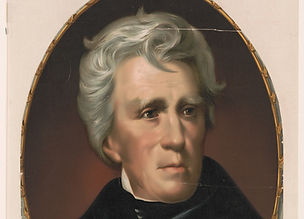
AdobeStock_746284108.jpeg

Movie: YouTube

Was Andrew Jackson a Hero or a Villain?

From: Parlay Universe

Grade Level: (HS), (College)

Remote Ready: With minimal modifications

Time: 1 class period or more

Length of Reading: Pages

Link:  Heroes or Villians in U.S. History:  Andrew Jackson

Students check out two short articles and two videos. These articles are 4+ and 2 printed pages respectively. Skip the article in step 2; it's the same as in step 1. The videos are 15 min and 10 min long respectively. Then students answer questions about whether he was a hero or villain. Finally, they respond to 2 of their classmates comments.

Native Americans and the Trail of Tears

AdobeStock_746284108.jpeg

Lesson: Jigsaw

Native American Policy

From: Gilder Lehrman

Grade Level: MS, HS

Remote Ready: With modifications

Time: 1-2 class periods

Length of Reading: Pages

Link:  Native American Policy

Jigsaw with 6 primary sources documents on Native American assimilation and Indian removal. Each document is 1 page long printed. Students write summaries of docs and/or answer questions. Comparison worksheet provided.
AdobeStock_746284108.jpeg

Lesson: Primary Sources

Indian Policy Docs

From: Digital History

Grade Level: (HS), College

Remote Ready: With Modifications

Time: 1-2 class periods

Length of Reading: Pages

Link: Indian Removal

This lesson features several excellent, short primary sources. Docs include excerpts regarding the Indian policies of: TJ, Monroe, and Jackson, in their own words. Maps and political cartoons about removal are also included. Read what those on the Trail of Tears and Indian leaders said about removal. There is an overarching question about how Indian Policy changed over time (under the "teacher resources" tab). To read about the activities we recommend for these docs, click the button.
AdobeStock_746284108.jpeg

Lesson: Make a Poster

Perspectives on Trail of Tears

From: Gilder Lehrman

Grade Level: HS, (College)

Remote Ready: With Modifications

Time: 1-2 class periods

Length of Reading: Pages

Link:  Perspectives on the Trail of Tears

Students check out maps, a painting, primary sources (three 1-2 page docs) and secondary sources. The teacher provides a short introduction to the Trail of Tears. On day 2 of the activity, students make posters which answer provided questions.

Nullification Crisis and Bank War

AdobeStock_746284108.jpeg

Lesson: Discussion

Nullification Crisis

From: Gilder Lehrman

Grade Level: MS, HS, College

Remote Ready: With Modifications

Time: 2 class periods

Length of Reading: Pages

Link: The Nullification Crisis

Students read an excerpt of the Tariff of 1828. They are divided into groups; each group reads a particular (1-4 page) response to it. On the second day, the class does a fishbowl discussion of the tariff and responses to it while answering provided discussion questions. Click the button for more information.
AdobeStock_746284108.jpeg

Lesson: Primary Sources

Jackson Vetoes the National Bank

From: Teaching American History

Grade Level: HS, (College)

Remote Ready: With Modifications

Time: 3-4 class periods

Length of Reading: Pages

Link:  Jackson Vetoes the National Bank

This is a 4 day activity. Students debate whether Congress had the authority to create the Bank of the United States. They then read speeches from prominent folks on Jackson's veto of the Bank of the United States, summarize them, and share their summaries. Click the button below for more information on each day's activity.
AdobeStock_746284108.jpeg

Lesson: Discussion

Bank War

From: Gilder Lehrman

Grade Level: HS, (College)

Remote Ready: With Modifications

Time: 2-3 class periods

Length of Reading: Pages

Link:  Andrew Jackson and the Bank War

Each of 6 groups is assigned a particular topic to research (Jackson, panic 1819, second bank of US, etc). The site recommends links to 2-4 short to medium sized articles for each topic. The second part of the lesson recommends creating a panel discussion with 3 students for and 3 students against the Bank of the United States. You may want to make adaptations so that the whole class is included in the discussion; maybe there are multiple panel discussions happening simultaneously. You could jigsaw the research topics or just have an old fashioned debate.

Slaves, Immigrants, Women

Slaves, Immigrants, and Women

Each of the teaching ideas below pertain to the Constitution.  Each teaching idea appears in its own box.  And each box indicates where the resources if from, the recommended grade level, whether it's remote ready, how long it will take, the length of the reading, and the link to the resource.  To learn more about it, click the box.

Slavery (See our Civil War page for more resources on slavery in the 1800s)

AdobeStock_746284108.jpeg

Lesson: Primary Sources with Worksheet

Slave Trade

From: Digital Inquiry Group

Grade Level: MS, HS

Remote Ready: With Modifications

Time: Less than 1 class period

Length of Reading: Paragraphs

Link:  Second Middle Passage

This lesson plan contains 4 short primary sources on the slave trade, including the personal accounts of an enslaved person and a slave trader, and questions/worksheets for each. There is also a short outline for a mini-lecture.
AdobeStock_746284108.jpeg

Lesson: Many Options

Teaching Hard History: The Changing Face of Slavery

From: SPLC Learning for Justice

Grade Level: MS, HS, (College)

Remote Ready: With Modifications

Time: Depends Upon Lesson

Length of Reading: Pages

Link:  Teaching Hard History Framework

After clicking on the link above, scroll to the "The Changing Face of Slavery (1808-1848)" Heading. And then choose the Summary Objective that most interest you. You will be linked to a short list of wonderful online resources and their descriptions.
AdobeStock_746284108.jpeg

Lesson: Primary Sources

Twelve Years a Slave (Paragraphs and Census Records)

From: DocsTeach

Grade Level: (MS), HS, (College)

Remote Ready: Yes!

Time: 2-3 Class Periods

Length of Reading: Paragraphs

Link:  Twelve Years a Slave

Students read several short sections from Twelve Years a Slave (just a paragraph or two each) along with corroborating documents (sections from 3 different census records are featured). They answer questions online and have the option to write 3 paragraphs regarding how census documents corroborate Solomon Northrup's story. Students enter their teacher's email address with their written responses, and their answers show up via a link in your inbox. While this is remote ready (and we love it), we would recommend paraphrasing the questions into your LMS so that they are easier to access and grade. For more teaching ideas regarding Twelve Years a Slave, click the button.
AdobeStock_746284108.jpeg

Lesson: Primary Source

Twelve Years a Slave (2 Passages, 7 Pages)

From: EDSITEment!

Grade Level: HS, (College)

Remote Ready: With Modifications

Time: 1 Class Period

Length of Reading: Pages

Link:  Twelve Years a Slave:  Analyszing Slave Narratives

2 activities available. There is a short background text and a link to a 12 Years a Slave movie trailer. Students read two 3-4 page sections of Solomon Northup's narrative about being kidnapped into slavery and what he saw once enslaved. One section is about an enslaved mother losing her children. The other is about an enslaved woman being whipped. The activity contains good overarching questions for discussion though the discussion focuses on how slavery undermined families and this brings up mature and sexual themes. The second activity involves the editor's intro to Northup's narrative and his verification methods. Click the button for a more detailed explanation.

Immigrants and Ladies

AdobeStock_746284108.jpeg

Lesson: Primary Sources with Worksheet

Irish Immigration

From: Digital Inquiry Group

Grade Level: (MS), (HS), (College)

Remote Ready: With Modifications

Time: 1 class period or less

Length of Reading: Paragraphs

Link:  Irish in 19th-Century America

Irish immigrants were discriminated against in 19th-century America. This lesson tackles the question: Were Irish immigrants considered "white"? It includes background info and slides for brief lecture, 2 very short docs, 2 political cartoons, worksheets and a graphic organizer.
AdobeStock_746284108.jpeg

Lesson: Primary Sources with Worksheet

Potato Famine

From: Zinn Education Project

Grade Level: HS, (College)

Remote Ready: With Modifications

Time: 1-2 class periods

Length of Reading: Paragraphs

Link:  Hunger on Trial:  An Activity on the Irish Potato Famine and Its meaning for Today

Students are divided into 5 groups, each representing one of the following: Irish Tenant Farmers, British Landlords, British Government, Anglican Church, or the system of Colonial Capitalism. Just like "The People vs. Columbus, et al," activity, students defend their group vs charges of genocide and indicate which group they find guilty. Each group is given a paragraph of background on their group. You might consider adding your own reading assignment on the Potato Famine.
AdobeStock_746284108.jpeg

Lesson: Primary Sources with Worksheet

Senaca Falls Convention

From: Zinn Education Project

Grade Level: HS, (College)

Remote Ready: With Modifications

Time: 2-3 class periods

Length of Reading: Chapter

Link:  Seneca Falls, 1848:  Women Organize for Equality

Students read chapter 6 from A People's History of the United States, by Howard Zinn (available online). Discussion questions are provided. Then students are divided into 5 groups. Each group is assigned an identity: white middle and upper-class reformers, mill workers in New England, Cherokee women in Oklahoma, Mexican women in New Mexico, and African American women who are enslaved. There is a one page description of each group. Students write resolutions from the perspective of the group they represent using the provided instructions. Next "traveling negotiators" from each group cycle through the other groups, attempting to build consensus on resolutions. Top resolutions are brought to the floor for group discussion. Finally, students discuss the actual resolutions at the Seneca Falls Convention. Students put each actual resolution into their own words. And students critique the actual declaration from the perspective of their assigned group.

Large image citations:

Crofutt, George.  “American Progress.” <em>Library of Congress</em>, c1873, https://www.loc.gov/pictures/item/97507547/ . Accessed: 6.14.2020.

​“Captain Lewis shooting an Indian.” Library of Congress,Philadelphia: Printed for Mattheew Carey, 1810, https://www.loc.gov/pictures/item/2001699660/. Accessed: 8.15.2020.

Cember Tech, "Andrew Jackson - US Currency - Presidents and Founding Fathers of the United States from Dollar Bills." Adobe Stock 509679544, 9 July 2025, https://stock.adobe.com/images/andrew-jackson-us-currency-presidents-and-founding-fathers-of-the-united-states-from-dollar-bills/509679544?prev_url=detail.

Stay Connected

Contact Us

bottom of page