top of page
black family. loc.jpg

Civil War and Reconstruction

At AntiTextbook.org, we have curated the best active learning lesson plans for American History Teachers.  We have sifted through the resources on amazing free sites like Digital Inquiry Group (formerly S.H.E.G.), Gilder Lehrman, and Facing History and Ourselves.  We’ve picked the best activities and given you a brief description.  You could skim through these sites yourself and read each of the 15-page activity descriptions.  Or you can let us do the work of searching and synthesizing for you.


Each box below contains a lesson. The icons under each image tell you if the lesson contains primary sources, secondary sources, research, group work, a writing assignment, videos, or games. The description tells you which free site the lesson comes from, what grade levels it is intended for, how much class time it will take, and how much reading is required. We've added a word or two about the remote-readiness of each lesson.  Click the orange button at the bottom of each box for more information on the lesson.


Lessons on this page are about the Civil War and Reconstruction.  We have divided the Activities into 3 categories and several subcategories:

Scourged_back_by_McPherson_&_Oliver,_1863,_retouched.jpg

Native

Americans

Scourged_back_by_McPherson_&_Oliver,_1863,_retouched_edited_edited.jpg

Slavery

Slavery

Each of the teaching ideas below pertain to the Slavery with subsections on Frederic Douglass's Slave Narrative and The Push for Freedom.  Each teaching idea appears in its own box.  And each box indicates where the resources if from, the recommended grade level, whether it's remote ready, how long it will take, the length of the reading, and the link to the resource.  To learn more about it, click the box.

Frederick Douglass's Slave Narrative

AdobeStock_746284108.jpeg

Lesson: Primary Source

Frederick Douglass Autobiography and Class Bonding Activity

From: Zinn Education Project

Grade Level: HS, (College)

Remote Ready: With Modifications

Time: 1 Class Period

Length of Reading: Pages

Link: Frederick Douglass Fights for Freedom

Students read 3.5 pages of Frederick Douglass's autobiography and then describe a time in their own lives where they resisted authority. This might allow for some class sharing and bonding.
AdobeStock_746284108.jpeg

Lesson: Primary Source

Frederick Douglass Autobiography Close Readings

From: EDSITEment!

Grade Level: HS, (College)

Remote Ready: With Modifications

Time: 1 Class Period

Length of Reading: Pages

Link: Frederick Douglass's "Narrative:"  Myth of the Happy Slave

Over 2 activities (and in 2 worksheets), students do close readings of 6 short (1/2 page each) passages from Douglass's autobiography. They answer questions. Students can write an essay about Douglass's rhetoric; a rhetoric definition sheet and rubric is included.

The Push for Freedom

AdobeStock_746284108.jpeg

Lesson: Many Options

Slave Resistance

From: Zinn Education Project

Grade Level: MS, HS

Remote Ready: With Modifications for Activities 3-5

Time: 4-5 Class Periods for All Activities

Length of Reading: Chapter

Link: Poetry of Defiance:  How Enslaved Resisted

In 5 separate activities, students (1) share quotes from slaves; (2) write poems about resisting slavery in groups; (3) read a poem; and (4) create a T-Chart about slave resistance and how owners attempted to crush resistance. Finally (5), you have the option to assign a chapter from Howard Zinn's A People's History of the United States. Click button below for a more in-depth description.
AdobeStock_746284108.jpeg

Lesson: Many Options

Slavery

From: SPLC Learning for Justice

Grade Level: MS, HS, (College)

Remote Ready: With Modifications

Time: Depends Upon Lesson

Length of Reading: Pages

Link:  Teaching Hard History Framework

After clicking on the link above, scroll to the "The Sectional Crisis and Civil War (1848-1877)" Heading. And then choose the Summary Objective that most interest you. You will be linked to a short list of wonderful online resources and their descriptions.
AdobeStock_746284108.jpeg

Lesson: Role Play

Abolitionists

From: Zinn Education Project

Grade Level: (MS), HS

Remote Ready: With Modifications for Part 2

Time: 1-2 Class Periods for All Activities

Length of Reading: Pages

Link:  Who Fought to End Slavery?

Meet the Abolitionists. This lesson comes in 2 parts. The first is a role-playing activity where each student is an abolitionist, and the second is "talk-back" journaling exercise based on an 8 page reading on the Abolition Movement.
AdobeStock_746284108.jpeg

Catchy Tunes

Spirituals Song Lyrics

From: Digital History

Grade Level: (HS), College

Remote Ready: With Modifications

Time: 1 Class Period

Length of Reading: Pages

Link:  Spirituals

No dedicated activity here but several very interesting resources. Read Harriet Tubman's song lyrics and answer questions about their coded meanings. Read the story behind Amazing Grace, read the lyrics, and listen to a recording. Read spiritual lyrcis and identify the Biblical references. And check out Library of Congress collections related to Southern music. A few links are broken. And again, you'll have to come up with your own questions or assignment.
AdobeStock_746284108.jpeg

Lesson: Many Options

John Brown

From: Digital History

Grade Level: (HS), College

Remote Ready: With Modifications

Time: Depends Upon Chosen Lesson Plan

Length of Reading: Pages

Link:  John Brown:  Hero or Terrorist?

Students read right-sized docs by John Brown and docs about John Brown in an attempt to answer fundamental questions about John Brown, his raid, and slavery. There are several lesson plans available to choose from under the "Teacher Resources" tab. Options include analyzing different accounts of John Brown's raid and completing a Venn Diagram, debating John Brown's sanity, analyzing the song "John Brown's Body," and re-enacting the trials of John Brown and his associates. A few links no longer work, but there are workarounds and ample additional resources.
service-pnp-ppmsca-12500-12557v_edited.jpg

Civil War

Civil War

Each of the teaching ideas below pertain to the Civil War, with subsections on Lincoln, Secession, The People, and The Fight.  Each teaching idea appears in its own box.  And each box indicates where the resources if from, the recommended grade level, whether it's remote ready, how long it will take, the length of the reading, and the link to the resource.  To learn more about it, click the box.

Lincoln

Hear From AI Abraham Lincoln

AdobeStock_746284108.jpeg

Primary Sources

What Did Lincoln Think About Slavery

From: Zinn Education Project

Grade Level: HS, (College)

Remote Ready: With Modifications

Time: 1 Class Period

Length of Reading: Pages

Link: A War to Free the Slaves?

Students read excerpts from Lincoln's first inaugural address, the original proposed 13th Amendment (which preserved slavery), and the Emancipation Proclamation. Students answer written and discussion questions to address how Lincoln's intention to keep or do away with slavery changed.
AdobeStock_746284108.jpeg

Lesson: Role Play

1860 Election

From: Zinn Education Project

Grade Level: HS, (College)

Remote Ready: No

Time: 1-2 Class Periods

Length of Reading: Pages

Link:  The Election of 1860 Role Play

Role Play. Each of 5 groups is assigned a role: Abraham Lincoln, Western Farmers, Northern Factory Owners and Merchants, Southern Plantation Owners, or Northern Workers. Each role has a one page description group members read. Then each group discusses and answers provided questions about what their group's issues are going into the 1860 election. After some discussion and the introduction of candidates, each group votes for the candidate that most aligns to their wants and needs. After the votes are tallied, the class discusses the outcome in character. Click the button below for more information.
AdobeStock_746284108.jpeg

Lesson: Graphic Organizer

Lincoln's Inaugural Addresses

From: Gilder Lehrman

Grade Level: MS, HS, (College)

Remote Ready: With Modifications

Time: 1 Class Period

Length of Reading: Pages

Link:  Lincoln's First and Second Inaugural Addresses

Students first read Lincoln's second inaugural address using a graphic organizer that calls for a close reading. They then move backwards to do a close reading of Lincoln's first address (abridged to 6 pages) in groups. Students complete a second organizer that calls for comparing the two speeches with a partner (graphic organizer is 9 pages, including the text of both speeches).
AdobeStock_746284108.jpeg

Lesson: Movie

Emancipation Proclamation

From: EDSITEment!

Grade Level: HS, (College)

Remote Ready: With Modifications

Time: 1-2 Class Periods for All Activities

Length of Reading: Pages

Link:  The Emancipation Proclamation:  Freedom's First Steps

3 Activities. Students watch 2 short film clips about the Emancipation Proclamation, read several docs, including the Proclamation itself, and answer questions.
AdobeStock_746284108.jpeg

Lesson: Graphic Organizer

Gettysburg Address

From: Gilder Lehrman

Grade Level: MS, HS, College

Remote Ready: With Modifications

Time: 1 Class Period

Length of Reading: Paragraphs

Links:  The Gettysburg Address OR The Gettysburg Address:  Identifying Text, Context, and Subtext

There are 2 lessons on the Gettysburg Address available here. The first lesson is called "The Gettysburg Address." Common Core. This lesson plan is subdivided into 5 lessons, but there's no reason that it couldn't be synthesized into one class period. Lessons 1, 2, and 3: Students read the Gettysburg address (1/2 page) and then fill out graphic organizers for each of the 3 paragraphs. In lessons 4 and 5, students analyze how the word "dedicate"--used 6 times in the speech-- changes meaning. Finally, students answer 3 questions. The second lesson is called "The Gettysburg Address: Identifying Text, Context, and Subtext." In this one, students examine the Gettysburg Address with the help of worksheets that lead students through a literary/rhetorical analysis.

Secession

AdobeStock_746284108.jpeg

Mock Trial

Is the Union Binding Mock Trial

From: EDSITEment!

Grade Level: HS, (College)

Remote Ready: With Modifications

Time: 2-3 Class Periods

Length of Reading: Pages

Link:  Abraham Lincoln on the American Union:  "A Word Fitly Spoken," Lesson 2:  The First Inaugural Address (1861)--Defending the American Union

Mock Trial. 3 groups: Unionists, Secessionists, and Judges. Question: "Is the Union of American States Permanent and Binding, or Does a State Have the Right to Secede?" Each side reads its own docs and fills in the worksheets. Docs include Lincoln's first inaugural address and South Carolina's secession doc, like the aforementioned lesson. But this lesson includes a couple more docs and worksheets to keep everyone's thoughts organized. Judges read both side's docs.
AdobeStock_746284108.jpeg

Lesson: Primary Sources

Secession

From: Digital Public Library of America

Grade Level: (HS), (College)

Remote Ready: With Modifications

Time: Depends Upon Chosen Lesson Plan

Length of Reading: Pages

Link:  Secession of the Southern States

The recommended "Classroom activity" (see heading at the bottom of the page) entails assigning groups to a particular state that seceded from the Union. The groups will analyze that state's secession doc and present on its main ideas as well as major happenings. Then the class discusses. Many state secession docs can be found on The Decision to Seceed site from the AHA. The secession of the Southern States page also lists 7 "Discussion ideas," each with links to 1 or 2 primary sources. There is also a research and presentation activity. You might use this as a choice board or pick the one(s) you like. You can, for example, compare speeches from Jefferson Davis and Abraham Lincoln. Or you can compare the secession docs of South Carolina and Texas. There are shorter docs as well, a broadside and an lithograph for example.

The People

AdobeStock_746284108.jpeg

Bell Ringer

Students Search the Civil War Database for Their Ancestors

From: National Parks Service

Grade Level: MS, HS, College

Remote Ready: Yes!

Time: 5 min

Length of Reading: Paragraphs

Link:  Search for Soldiers
Did your ancestors serve in the Civil War? Enter your last name here. If your last name is a common one, the first name of your ancestor will be helpful too.
AdobeStock_746284108.jpeg

Lesson: Secondary Sources

Women and the Civil War

From: Gilder Lehrman

Grade Level: HS, (College)

Remote Ready: With Modifications

Time: 5-6 Class Period For All Activities

Length of Reading: Pages

Link:  Women and the Civil War
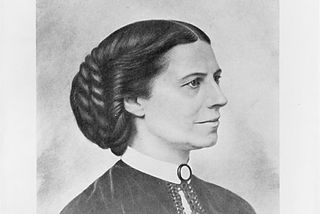
3 activities here. In each, students are divided into groups. Each group researches an assigned topic via provided links to secondary sources. The first activity deals with women BEFORE the Civil War; groups share what they learned. The second activity deals with women DURING the Civil War; it involves a panel discussion. And the third activity deals with women--you guessed it--AFTER the Civil War; it involves a class discussion. Click button below for more information.
AdobeStock_746284108.jpeg

Lesson: Solve a Mystery

New York City Draft Riots Mystery

From: Zinn Education Project

Grade Level: HS, (College)

Remote Ready: No

Time: 1 Class Period

Length of Reading: Paragraphs

Link:  The Draft Riot Mystery

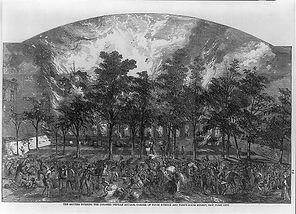
Each student is given a clue. There are 30 clues; each clue is 1-3 sentences long. The class is asked to solve the mystery of why the 1863 New York City draft riots occurred based on these clues with minimal teacher intervention. Afterwards, students answer provided questions and discuss. As an extra option, students can talk or write about being scapegoated for something in their own lives. You'll need to log-in. Click "Download to Read in Full" two separate times.
AdobeStock_746284108.jpeg

Article

Was Robert E. Lee All That?

From: The Atlantic

Grade Level: (HS), (College)

Remote Ready: Yes!

Time: 1 Class Period or Less

Length of Reading: Pages

Link:  The Myth of the Kindly General Lee

Check out this article from The Atlantic debunking Lee's awesomeness and describing the Lost Cause (3 printed pages). Everyone gets 5 free articles from The Atlantic each month without a subscription.
AdobeStock_746284108.jpeg

Lesson: Primary Sources (Posters)

Ads Recruiting Black Soldiers and Laborers

From: Docs Teach

Grade Level: MS

Remote Ready: Yes!

Time: 1 Class Period or Less

Length of Reading: Paragraphs

Link:  Comparing Civil War Recruitment Posters

Students compare a Union ad recruiting black soldiers with a Confederate ad asking slave owners to provide slave laborers. Students answer 4 questions. Armed with their teacher's email address, students can write the answers to the provided questions and send them to their teacher within the Docs Teach site. Teachers will have to click through an email link from each student though. So Anti-textbook recommends paraphrasing the questions into your LMS so that written answers are easier to grade.

The Fight

AdobeStock_746284108.jpeg

Lesson: Primary Sources

Civil War Medicine

From: Gilder Lehrman

Grade Level: HS, (College)

Remote Ready: With Modifications

Time: 2-3 Class Periods for All Activities

Length of Reading: Pages

Link:  Deadly Diseases:  A Fate Worse than Dying on the Battlefield

Slides are proved for an optional 10 min lecture on Civil War Medicine. Each student group gets a unique set of primary sources on Civil War medicine. Each group creates a poster about their docs and present. Click button below for more information
AdobeStock_746284108.jpeg

Lesson: Primary Sources (Photos)

Matthew Brady Photographs

From: Docs Teach

Grade Level: MS

Remote Ready: Yes!

Time: 1 Class Period or Less

Length of Reading: Paragraphs

Link:  The Civil War as Photographed by Matthew

Students review a few photos individually and then meet with their group members who have viewed the remaining photos to discuss (there are 15 photos total). Students list adjectives to describe their photos and answer overarching questions. Click the button below for more information
emancipation Nast Loc.jpg

Reconstruction

Reconstruction

Each of the teaching ideas below pertain to Reconstruction with subsections on Freedom and Reconstruction Plans v. Action.  Each teaching idea appears in its own box.  And each box indicates where the resources if from, the recommended grade level, whether it's remote ready, how long it will take, the length of the reading, and the link to the resource.  To learn more about it, click the box.

Freedom

AdobeStock_746284108.jpeg

Lesson: Debate

How Free Were Former Slaves During Reconstruction

From: Stanford History Education Group (SHEG)

Grade Level: MS, HS

Remote Ready: With Modifications

Time: 1 Class Period

Length of Reading: Pages

Link:  Reconstruction SAC (Structured Academic Controversy)

One of our faves! According to SHEG, "In this structured academic controversy, students examine constitutional amendments, a Black Code, a personal account of a former slave, and other documents to answer the question: 'Were African Americans free during Reconstruction?'" Our summary: Students work in groups of 4. Everybody reads 5 very short docs. Teams of 4 are divided in half with 2 students making the case that African Americans were free during Reconstruction and the other 2 arguing the opposite. Each pair explains their arguments to the other pair. Then students try to reach consensus. Questions and graphic organizers provided.
AdobeStock_746284108.jpeg

Lesson: Role Play

Reconstruction Meet and Greet

From: Zinn Education Project

Grade Level: (MS), HS

Remote Ready: With Modifications

Time: 1 Class Period or Less

Length of Reading: Paragraphs

Link:  When the Impossible Suddenly Became Possible:  A Reconstruction Mixer
Role play. Each student gets a half-page description of one of 21 people who fought for African American or women's rights after the Civil War (examples include Elizabeth Cady Stanton, Frederick Douglass, African American politicians, etc). Students meet and greet each other in character, asking one of 8 provided questions. Added bonus: students practice social skills. Finally the class discusses using provided questions. Click "Download to Read in Full" to get to the PDF instructions (you actually have to do this twice).
AdobeStock_746284108.jpeg

Lesson Type: Primary Sources

Slave Narratives and Primary Sources on Rights of Freed Slaves

From: Investigating US History

Grade Level: HS, College

Remote Ready: With Modifications

Time: 1 Class Period

Length of Reading: Pages

Link:  The Meaning of Emancipation in the Reconstruction Era

To begin, students look at political cartoons. Then students look at WPA Slave narratives and answer questions. This requires a little bit of searching because the Library of Congress Links have moved and the recording is broken. But you can find the missing resources with a Google search so we think it's still worthwhile. Next students read 10 primary sources on the debate over the rights of newly freed slaves and answer 3 overarching questions. Finally, students write an editorial assessing Reconstruction.
AdobeStock_746284108.jpeg

Lesson: Primary Sources

Freedmen's Bureau

From: Docsteach.org

Grade Level: HS, (College)

Remote Ready: Yes!

Time: 1 Class Period or Less

Length of Reading: Paragraphs

Link:  How Effective were the Efforts of the Freedmen's Bureau?

Students "weigh the evidence." Seven primary sources on the Freedmen's Bureau are available. Students read them and then drag and drop their icons on a scale. One side of the scale is evidence that the Freedmen's Bureau was effective the other side is evidence that the Bureau was not effective. Evidence can be dropped in between the two sides as well. Many of the hand written docs have been transcribed. Be sure to click on "View Document Details," and then click on the orange "Show/Hide Transcript" button near the bottom of the page Students answer questions. They can email the answers to their teacher directly from the page. We recommend paraphrasing the questions in your LMS. That way teachers won't have to open an email from each student and click through each answer.
AdobeStock_746284108.jpeg

Lesson: Compare Primary Source to Your Textbook's Account

Sharecropping

From: Stanford History Education Group (SHEG)

Grade Level: MS, HS

Remote Ready: With Modifications

Time: 1 Class Period or Less

Length of Reading: Paragraphs

Link:  Sharecropping

According to SHEG, "In this lesson, students critically evaluate their classroom textbook's account of sharecropping by comparing it to a sharecropping contract from 1882." Teachers must provide sharecropping section from their textbook. Students look at the sharecropper contract in pairs, answer questions, then discuss it as a class. For more information, click the button below.

Reconstruction Plans vs. Action

AdobeStock_746284108.jpeg

Movie

Reconstruction Video Series

From: Facing History and Ourselves

Grade Level: HS

Remote Ready: Videos: Yes!

Activities: With Modifications

Time: Depends Upon Chosen Activities

Length of Reading: Pages if Choose Activities

Link:  The Reconstruction Era and the Fragility of Democracy

Watch this documentary video series where the experts walk your students through Reconstruction with the aid of photographs. There are 6 videos. They are 12-16 minutes each. There are activities to accompany a few of the videos. For more info on those activities, click the button below.

Large Image Citations (smaller images are cited in the lesson's dynamic page):

"Unidentified African American soldier in Union uniform with wife and two daughters." Library of Congress Prints and Photographs Division, 9, July 2025, https://www.loc.gov/pictures/item/2010647216/.

O'Sullivan, Timothy H, and Alexander Gardner, photographer. A harvest of death, Gettysburg, Pennsylvania / negative by T.H. O'Sullivan; positive by A Gardner. 1863 July. Photograph. Retrieved from the Library of Congress, <www.loc.gov/item/2006685384/>.

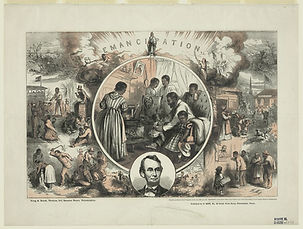
King & Baird, Engraver, et al. Emancipation / Th. Nast ; King & Baird, printers, 607 Sansom Street, Philadelphia. [Philadelphia: Published by S. Bott, no. 43 South Third Street, Philadelphia, Penna] Photograph. Retrieved from the Library of Congress, <www.loc.gov/item/2004665360/>.

Brady, Mathew Benjamin. "McPherson & Oliver:  Whipped Peter." Wikipedia, 9 July 2025, https://en.wikipedia.org/wiki/File:Scourged_back_by_McPherson_%26_Oliver,_1863,_retouched.jpg.

Stay Connected

Contact Us

bottom of page